
The Power of Pattern Games in Dog Training
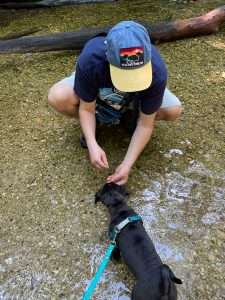
Dogs benefit from predictability and patterns. They find comfort in patterns and love when they know what to expect. Pattern games were developed by Leslie McDevitt in 2007. Since then, thousands of dogs have been helped by the power of pattern games in dog training.
Why do Pattern Games work?
Pattern games give dogs what they need to feel secure. They provide predictability. Once a dog learns a game, the game stays the same- no matter where we play it. This means that when we are in new environments with our dogs, pattern games bring a sense of order to them and allows them to know what to expect next. This means that many dogs experience a reduction of anxiety, especially in new environments.
Patter games also increase engagement and focus in dogs. They are structured in a way to help dogs engage with their owners and focus on the owners- not the environment. This is a huge help with reactivity in dogs, and also with fear or nervousness.
Pattern games offer the chance to build positive associations with situations that may have been negative for dogs. For example, many reactive dogs benefit from pattern games when around their trigger- developing a positive association with other dogs/ people/ etc. The predictability of see the trigger, play the game, get a treat is helpful in cementing positive associations.
Pattern games can also work to help with impulse control. Dogs need to wait for cues and focus before getting the treats, and this can help with intense and sudden reactions. Dogs learn to slow down a bit before reacting.
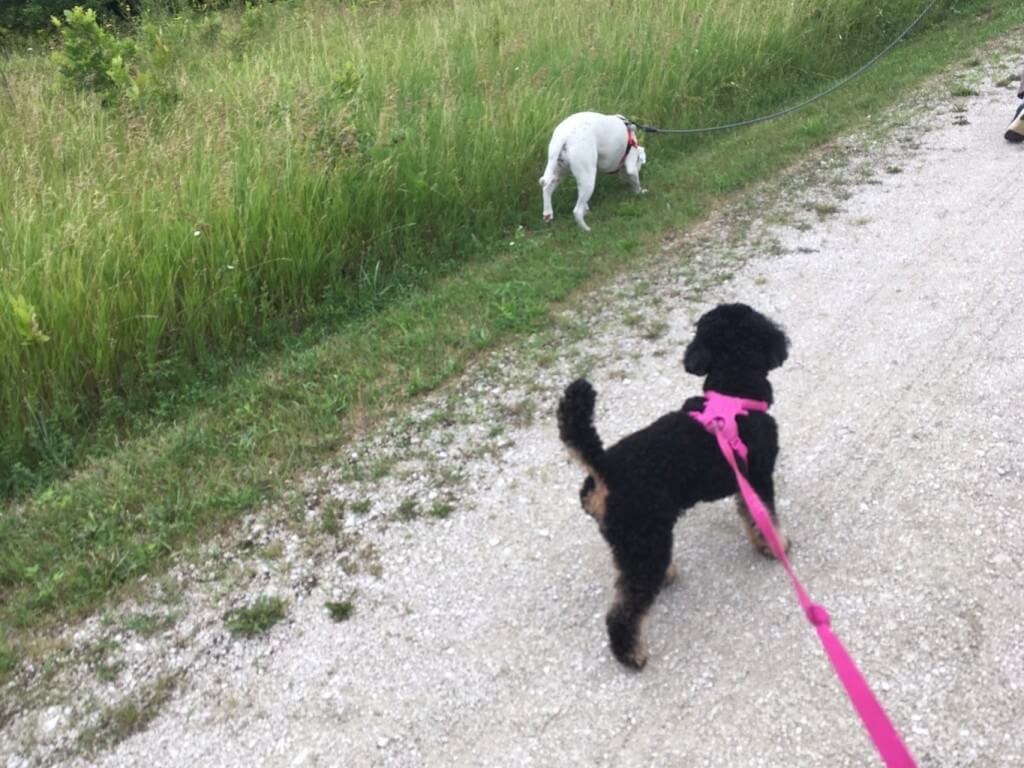
Helpful hints when doing Pattern Games
Pattern games are easy to learn, but they can take practice for you and your dog! Here are a few tips to keep in mind when learning new pattern games with your dog.
- Start simple: the games are easy, but it's important that you make them easy for your dog too. For example, with Find It, we ask a dog to follow a trail of treats that have been dropped or scattered. In the beginning, we drop the treats close to the dog and close together. As your dog gets better at the game, you can scatter the treats farther apart.
- Consistency is key: play the games at different times of the day, in different environments and as often as you can. The more you play the games, the more fun you and your dog will have and they will learn the games faster! This is especially important if you are using pattern games to help with reactivity- play them on every walk, not just when the trigger is around or your dog will associate the pattern game with their trigger!
- Gradual progression: This is similar to start simple, basically, when you are advancing the games, don't make them too hard too fast.
- Use positive reinforcement: The games are meant to be fun for you and your dog- don't ruin the fun by using aversives or yelling. Play the games when you and your dog are ready and relaxed and have fun! Using tasty treats or your dogs favorite toy helps build a strong association that is positive.
Some Examples of Pattern Games
Up/ Down:
Up/Down is one of the easier games for dogs to learn- it has a very short learning curve, with a huge upside. Up/Down slows the brain down a bit and helps our dogs focus and engage with us. Below is a video of our trainer, Amy, demonstrating the game.
Basically, you place a treat on the ground between your feet. When your dog eats the treat, wait for them to look at you (don't call them or cue them, just wait), when they turn to you, mark and reward.
Get it:
Get it is a pattern game that gets your dog moving in a direction you need them too. You gently toss treats 2-3 feet away from you. You can do this while walking to keep your dog walking, or while standing in one place to help your dog refocus.
In this video, our trainer, Sylvie, is working with a clients dog. Get it is being used to help Benji refocus on her and stay engaged with her.
Spot/ Up:
Spot and Up are two games that are perfect for dogs that are active and like to move and be more active. They work by giving your dog something to focus on other than the environment and your dog gets to use their bodies!
Spot is simply putting two feet up on something, Up is putting all four feet up on something. Below is a video of spot being trained. Basically, you hold a treat high enough that your dog needs to put their front paws up to get the treat. You can use a bench, a tree, a step- anything that requires your dog to put two paws up to reach the treat. While they are up, continue feeding them for a few seconds.
Up is very similar, but we are asking our dogs to jump fully onto a surface like a bench, log, or raised area. Keeping our dogs active helps them focus on us while satisfying the need to move.
There are many more pattern games that we use for leash manners, helping reactive dogs, and just for fun! Pattern games give your dog the predictability they need to feel secure in almost any environment. They foster engagement and focus, build confidence and reduce stress and anxiety!
If you think your dog would benefit from learning more pattern games, reach out to us today!