
Why Teaching Your Dog to Relax Is One of the Most Important Skills You Can Train
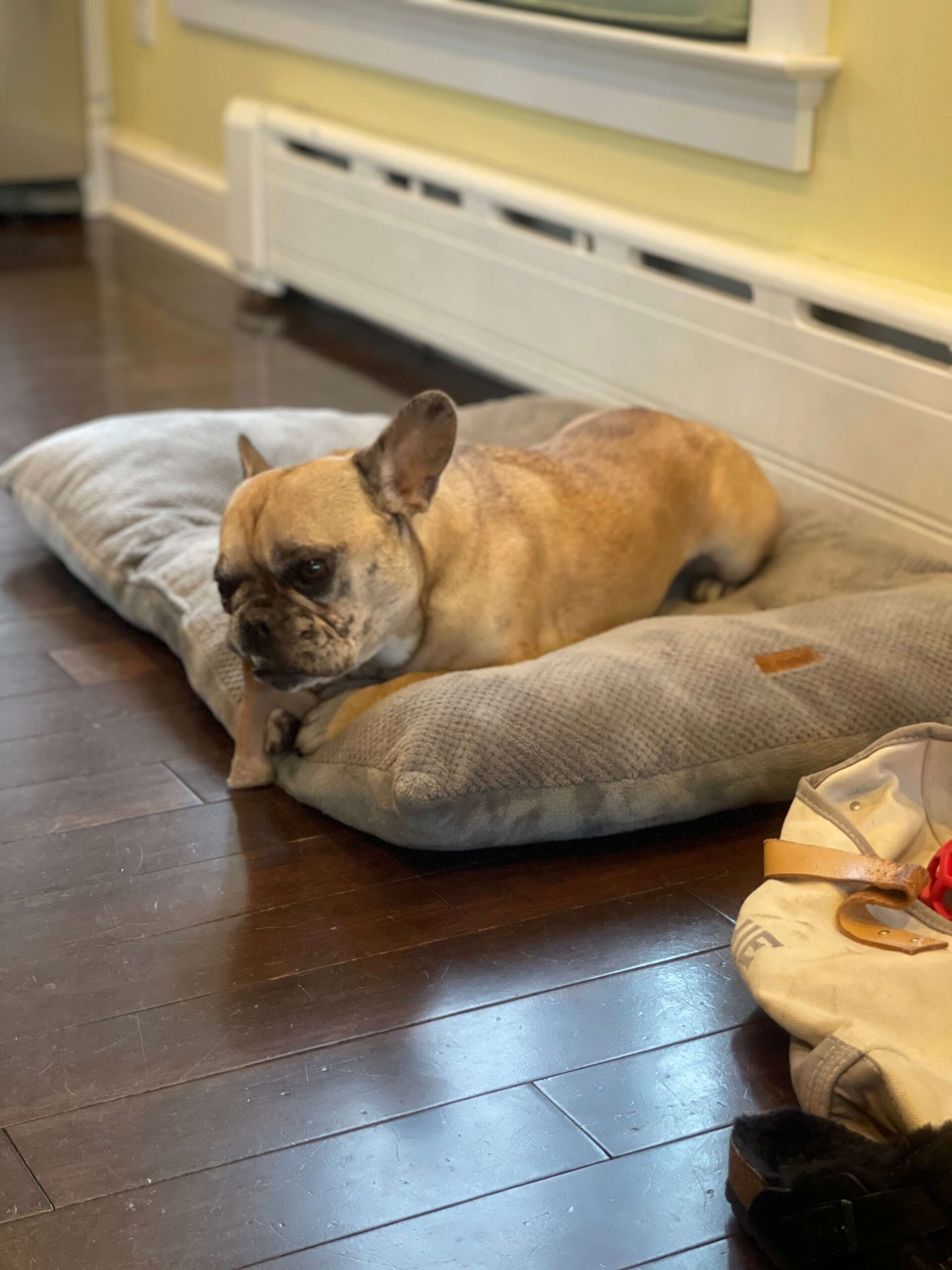
You've probably heard this advice before: a tired dog is a good dog. Run them longer. Add another walk. Wear them out, and the barking, lunging, pacing, and hypervigilance will settle down.
For some dogs, more movement can help, but for reactive, shy, and highly sensitive dogs, this approach often backfires. Physical exhaustion is not the same as emotional regulation. A dog who is anxious, overstimulated, or running on a chronic background hum of stress does not become calm because they are tired. They become a tired, anxious dog who still cannot settle.
The good news is that calm is a skill. It can be learned, practiced, and reinforced, just like a sit or a recall. And understanding how and why to teach it changes everything for dogs who are struggling, and for the people who love them.
The Dog Who Can't Switch Off
Most of us can recognize a stressed dog when the behavior is obvious: lunging at other dogs, barking at strangers, cowering in new spaces, or freezing on walks. But chronic low-level stress in dogs often looks more subtle. It looks like a dog who never truly rests, who startles easily, who demands constant attention, who is always scanning the room. It looks like a dog who is exhausting to live with, not because they are bad, but because they are working incredibly hard just to get through the day.
This matters because of what stress does to the body over time.
A 2024 review published in the journal Animals (MDPI) examined cortisol dynamics in dogs across a wide range of studies, drawing on research published between 1999 and 2023. The review found that in dogs, cortisol is part of an adaptive system that modulates immune function, metabolism, and behavior under varying conditions.
Acute stress, the kind that spikes and resolves, serves a purpose. Chronic stress, the kind that never fully dissipates, is another matter entirely. When the stress response stays activated, the body pays a cost. Immune function, digestion, learning capacity, and emotional regulation are all affected (Sapolsky et al., referenced in: Behavioral, Physiological, and Pathological Approaches of Cortisol in Dogs, Animals 14(23), 2024).
For the reactive dog, this creates a feedback loop that is genuinely physiological, not just behavioral. The dog is not choosing to overreact. Their nervous system is primed, their threshold is low, and their capacity to think clearly under pressure is genuinely compromised by the chemistry happening inside their body.
This is not a training failure. It is a welfare issue that training can help address.
What Reactivity and Shyness Actually Are
Reactivity is a word that gets used broadly, but at its core it describes a dog whose responses to stimuli are faster, bigger, or more difficult to interrupt than is typical. Reactive dogs are not aggressive by nature, though reactivity that is not addressed can escalate. They are dogs whose emotional threshold is lower than their environment often demands.
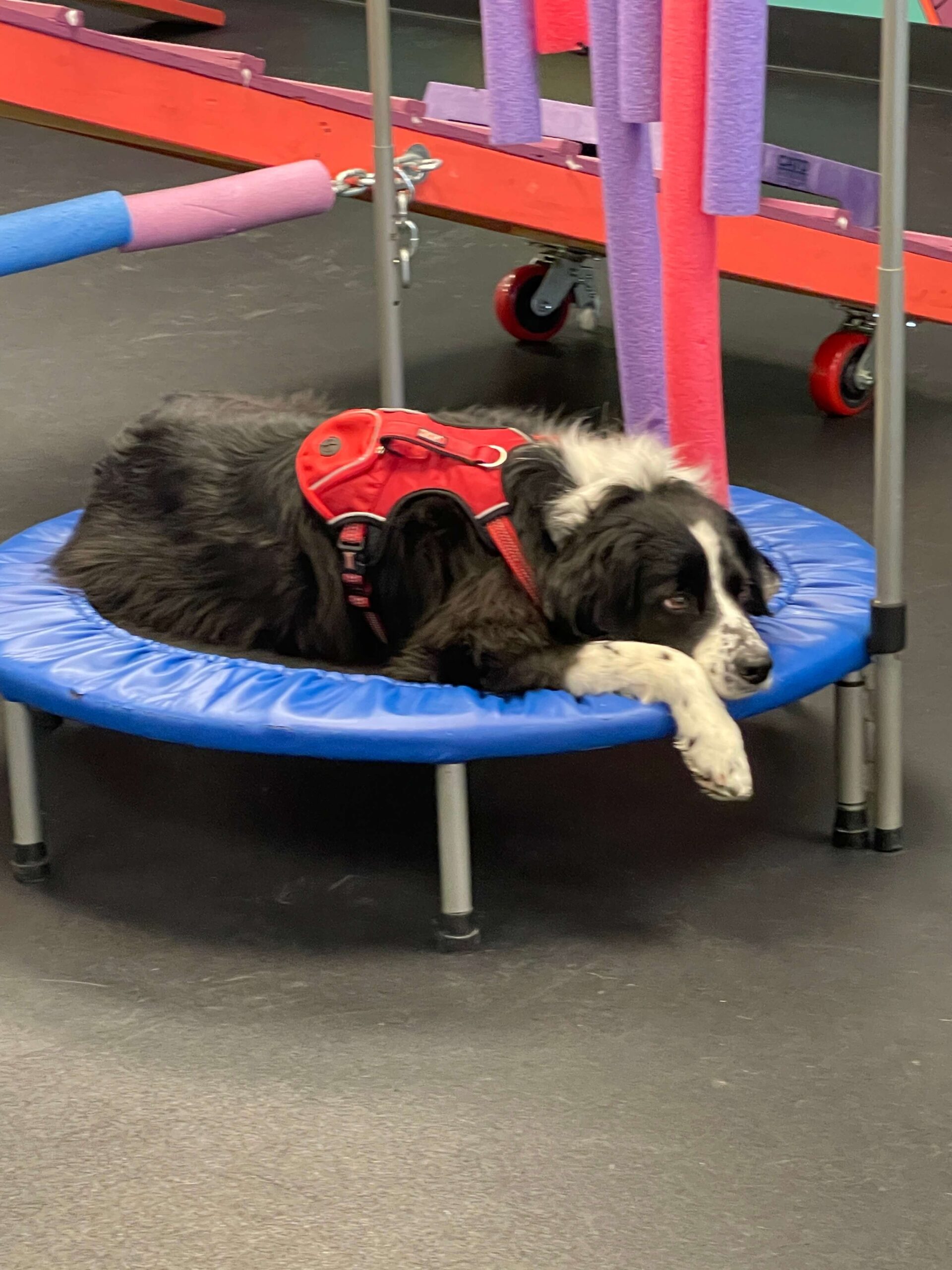
Shy dogs present differently but share a similar root: the world feels less safe than it should. They may freeze, hide, shut down, or avoid. They may appear well-behaved in the way that someone who has gone very still to avoid danger appears well-behaved.
Both profiles reflect a nervous system that is working overtime. And both respond remarkably well, with patience and the right approach, to training that directly targets their capacity to regulate.
The key word there is directly. Teaching a reactive dog to sit is useful. Teaching a reactive dog to feel calm, and reinforcing that state consistently, is transformative.
The Whole Dog: Why One Approach Does Not Fit All
One of the most important frameworks to emerge in modern dog training comes from applied ethologist and behavior consultant Kim Brophey, CDBC, whose 2018 book Meet Your Dog: The Game-Changing Guide to Understanding Your Dog's Behavior introduced what she calls the L.E.G.S. model.
L.E.G.S. stands for Learning, Environment, Genetics, and Self. Brophey's argument, grounded in ethology and drawing on research across more than twenty scientific disciplines, is that a dog's behavior can only be understood when all four of these elements are considered together. The way a dog learns, the environment they live in, the genetic heritage they carry from their breed lineage, and their individual self, meaning their health, age, neurological state, and life history, all intersect to produce the dog in front of you.
This matters enormously when we are talking about calm and relaxation.
A Malinois from working lines is not being difficult when they struggle to settle in a quiet apartment. A herding breed is not defective when mental under-stimulation makes them anxious and reactive. A dog with a history of trauma is not being stubborn when they cannot relax in spaces they have not learned to trust. Each of these dogs has a different starting point, and the path to calm for each of them looks different.
The L.E.G.S. model asks us to stop trying to fit dogs into a single mold and start asking: who is this dog, what do they need, and what is getting in the way? This is the foundation of how we approach training at Canine Einstein. We meet dogs where they are, not where we expect them to be.
The Body-Mind Connection
Sarah Fisher is a Tellington TTouch Instructor, canine behavior counselor, and the founder of Animal Centred Education (ACE). Her work draws on decades of hands-on practice with dogs, horses, and other species, and centers on something that behavior training alone often misses: the relationship between physical tension and emotional state.
In her book Unlock Your Dog's Potential: How to Achieve a Calm and Happy Canine, Fisher describes how tensions in the body are not just symptoms of stress, they can sustain it. A dog who carries chronic physical tension in their neck, shoulders, or hindquarters is not only uncomfortable. Their posture influences their nervous system and their capacity to access calm.
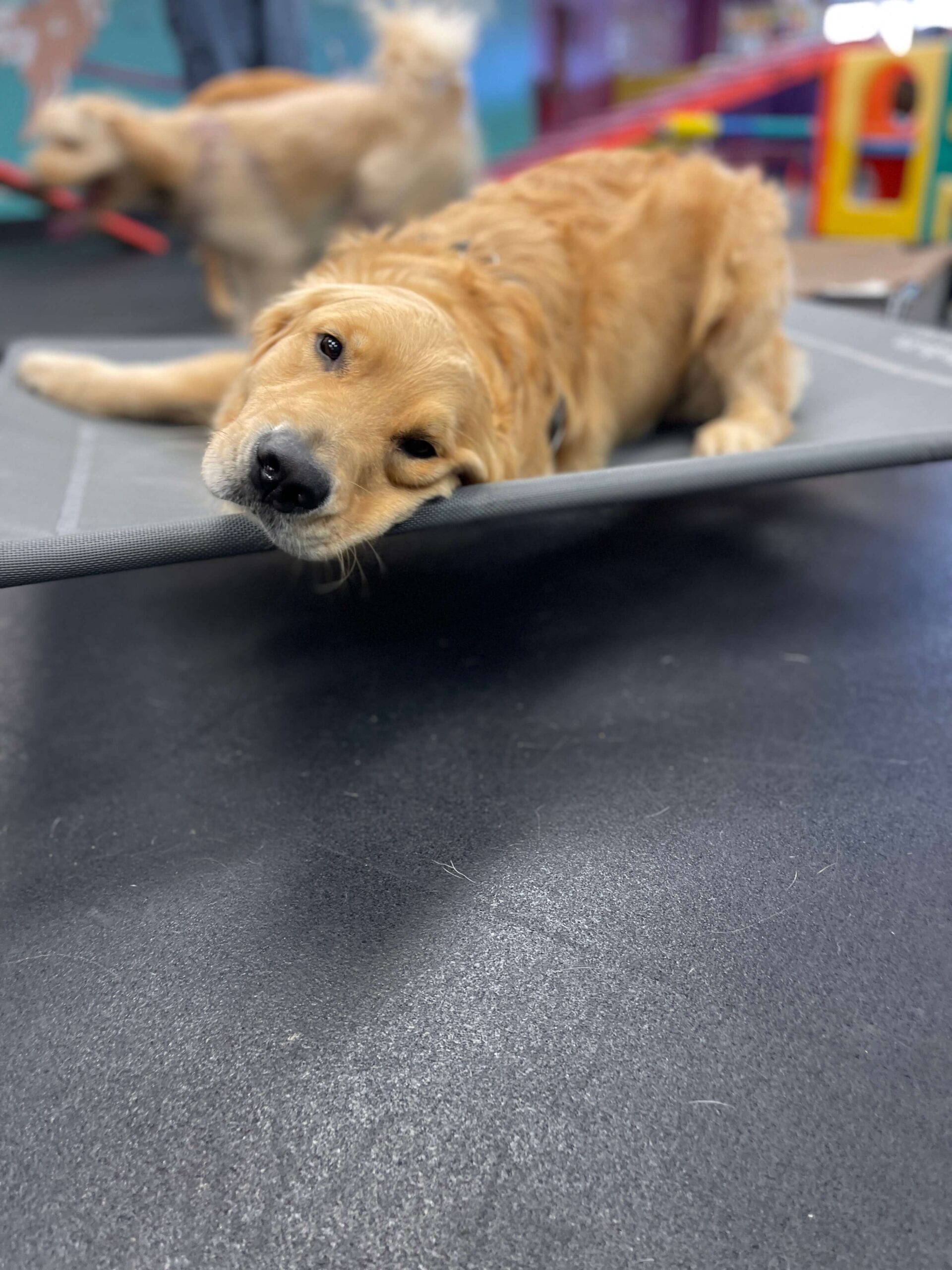
Fisher writes that TTouch bodywork and groundwork exercises appear to increase neurotransmitters responsible for the feel-good factor, including dopamine and serotonin, and observes that when these techniques are used with dogs that are nervous or over-aroused, they settle and become more relaxed in a surprisingly short time. They become more considered in their responses rather than automatic.
What this tells us practically is that helping a dog relax is not always only a matter of training new behaviors. Sometimes it is about creating the conditions in which the body can release held tension, so that the nervous system has room to downregulate. This is part of why Canine Einstein's approach integrates movement, body awareness, touch/massage and varied environmental experiences alongside formal training. We are working with the whole dog, which includes their physical state.
The Neuroscience of Trauma in Dogs
Daniel Shaw MSc, CDBC, is an animal behaviourist and the owner of Animal Behaviour Kent (ABK) in the UK, where he specializes in aggression, frustration, and trauma in dogs. With a master's degree in neuroscience and a background in psychology, Shaw bridges cutting-edge research with real-world applications. He teaches internationally, including on the neuroscience of trauma in dogs and its implications for leash reactivity and fear-based behavior.
 Shaw's work centers on understanding what is happening physiologically inside a dog who has experienced stress, fear, or trauma. His perspective, grounded in neuroscience emphasizes that trauma and chronic stress alter how the nervous system processes information. A dog who has been in a state of chronic threat activation does not simply return to baseline once the stressor is removed. The nervous system has adapted, often in ways that make calm and connection more difficult without deliberate, patient intervention.
This is a crucial piece of the puzzle for owners of reactive or shy dogs. The dog who lunges at the end of the leash or shuts down in a new environment is not operating from a place of choice in the way that we might imagine. They are operating from a nervous system that has learned, through experience, that the world is unpredictable or unsafe. Changing that requires more than managing behavior in the moment. It requires creating enough consistent, positive, low-stress experience that the nervous system slowly learns a different expectation.
That takes time. It takes repetition. And it takes an environment, and a trainer, equipped to provide both.
Why Calm Has to Be Taught, Not Just Expected
A common misconception in dog training is that calm is a default state, something dogs return to naturally when they are not being pushed past their limit. For many dogs, especially those carrying stress, this simply is not true.
Calm is a skill that must be explicitly practiced and reinforced. A dog does not learn to settle by being left to figure it out. They learn to settle when calm moments are noticed, valued, and rewarded, and when the training environment is structured to make those moments accessible in the first place.
This is the purpose of formal relaxation training: not to suppress behavior, but to teach the dog that stillness, groundedness, and a loose body are things that feel good and that result in good things happening. When practiced consistently, this creates a new pattern in the nervous system, one that the dog can access even as difficulty increases.
Dr. Karen Overall's Protocol for Relaxation, first published in 1997 and still widely used by positive trainers worldwide, is one of the most well-established tools for building this skill systematically. The protocol guides dogs through progressively more distracting environments, reinforcing calm, settled behavior at each stage, and building a genuine capacity for regulation rather than just the absence of reaction.
It is worth noting, as the Fenzi Dog Sports Academy has written, that truly teaching a dog to feel calm requires their emotional system to be genuinely satisfied, which means adequate physical engagement, adequate mental engagement, and the right match between the dog's needs and their daily life. Teaching settle behaviors without meeting those underlying needs is like putting a bandage on a wound that requires more care. It addresses the surface without resolving the root.
This is why a comprehensive approach to calm involves the whole lifestyle, not just one protocol.
What Calm Training Looks Like in Practice
So what does it actually look like to teach a dog to relax? A few core principles guide the process, regardless of which specific tools or methods you are using.
Start below threshold.
A dog who is already activated cannot learn calm. Training happens in the window where the dog can still think, process, and make choices. For a reactive dog, this often means starting in very quiet environments, at significant distance from triggers, or in a private space with no competing demands. Building calm in easy conditions gives the dog a skill they can then take into harder ones.
Reinforce what you want to see more of.
This sounds simple but is genuinely countercultural for many dog owners, who are trained by daily life to notice problems rather than progress. The dog lying quietly by your feet is doing something worth acknowledging. Relaxed breathing, a loose body, a self-initiated settle on their mat, these are behaviors that deserve a calm, warm marker and a reward. Over time, dogs who are reinforced for being relaxed begin to choose it more.
Create a body that can access calm.
Physical comfort matters. A dog who is in pain, who is physically under-stimulated, or whose body carries chronic tension will have a harder time settling. Movement, appropriate exercise, and physical enrichment are not separate from relaxation training. They support it.
Also, consider if your dog is in pain or discomfort. Medical interventions may be needed to help relieve the pain so your dog can more easily relax.
Reduce cumulative stress.
Stress in dogs is cumulative, meaning that a series of minor stressors in a single day can push a dog over threshold just as reliably as a single large one. Managing the overall stress load in a dog's daily life, through thoughtful routine, reduced exposure to triggers where possible, and consistent recovery time, creates the conditions in which training can take hold.
Slow down.
This is perhaps the hardest one for time-pressed owners. Decompression, which we will come back to in a moment, is not a luxury. It is a physiological necessity. Dogs who have space to move at their own pace, follow their nose, and operate without pressure or expectation are dogs whose nervous systems have the chance to genuinely downregulate.
How Canine Einstein Supports Calm: Our June Programs
Everything above informs how we have structured our programming at Canine Einstein. Each offering supports relaxation and calm through a different lens, and together they address the physical, cognitive, sensory, and behavioral elements that real calm requires.
Decompression in Nature
This class centers on some of the most evidence-backed tools we have for lowering a dog's arousal level: sniffing, world watching and calming behaviors.
A dog's sense of smell is their primary sensory channel. When a dog is allowed to move at their own pace and follow their nose freely, something measurable happens physiologically. Research on olfactory enrichment and heart rate variability in dogs, published in the peer-reviewed journal Animals in 2020 by Amaya and colleagues at the University of Queensland, found that sensory enrichment has a physiological effect on the autonomic nervous system, influencing the balance between sympathetic (arousal) and parasympathetic (calm) activity (Amaya et al., Animals 10(8), 2020).
When we allow dogs to sniff freely, research suggests that cortisol levels decrease, that the nervous system shifts toward a parasympathetic state, and that dogs who are given this opportunity during or after stressful experiences recover more quickly. Allowing a dog to sniff is not a training reward in the traditional sense. It is a biological need.
World watching is exactly what it sounds like. It is allowing the dog to watch their world at a distance from their triggers that allows them to relax, decompress and learn. Simply allowing your dog time to watch and process what they are seeing at distance they feel safe, increases resiliency, confidence and their ability to calm. Below is a beautiful video example of a dog world watching.
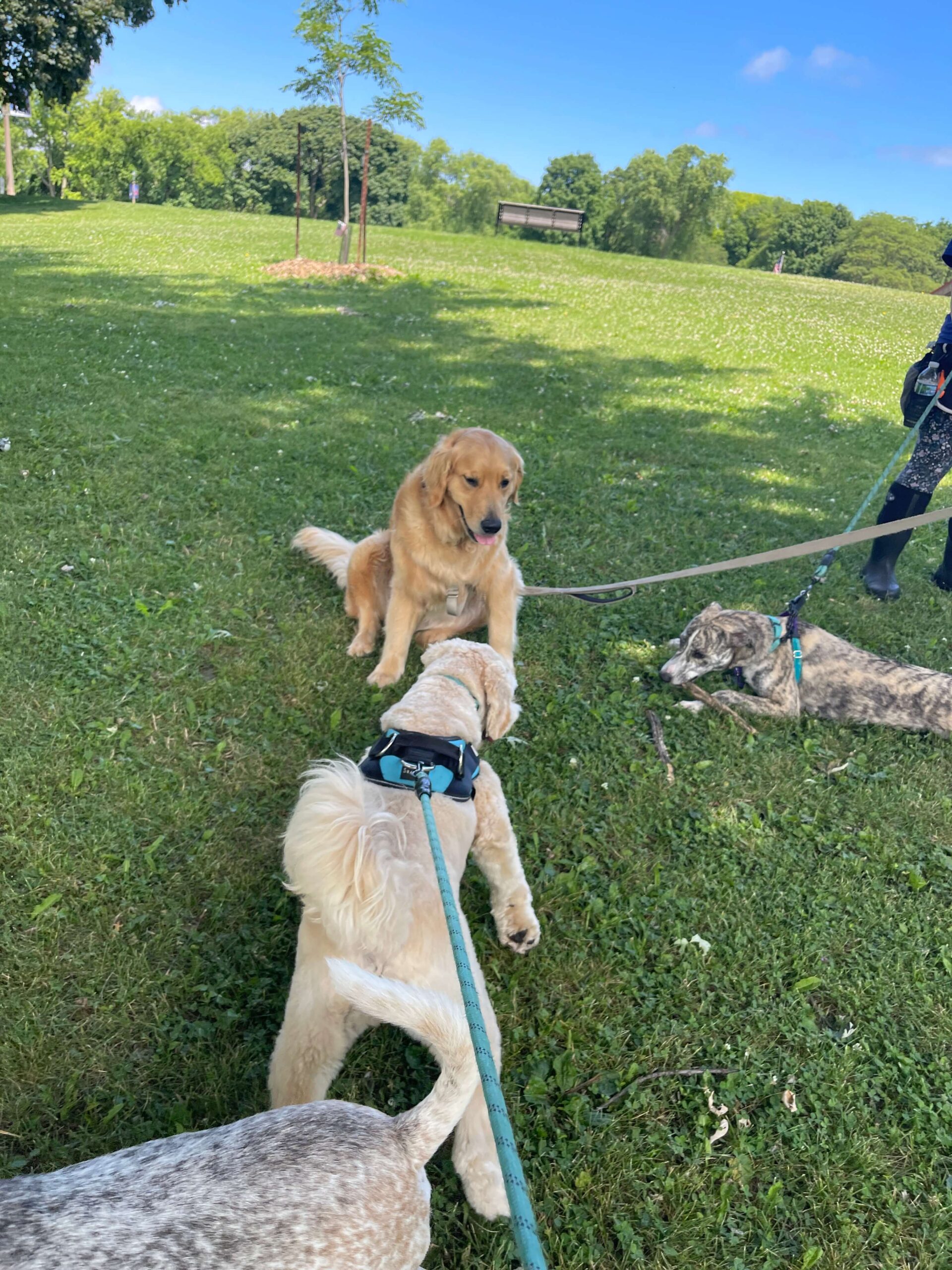
Our Decompression in Nature class takes these principles into Milwaukee's local parks and green spaces. The focus is not on heeling, performance, or structured obedience. It is on helping dogs slow down, explore freely, and experience the outdoors as a restorative rather than a stimulating experience. For reactive and shy dogs in particular, who often find standard walks stressful rather than relaxing, this kind of deliberate decompression can be genuinely transformative.
Canine Fitness
A comfortable body relaxes more easily. This is not abstract. Chronic physical discomfort, poor proprioception, or a body that lacks core stability creates a baseline of low-level tension that makes settling harder. Dogs who are not physically comfortable in their own bodies are dogs who are harder to calm.
Our Canine Fitness class, lead by Two Left Feet Canine Fitness, is designed to build body awareness, stability, and physical ease in a positive, low-pressure environment. Drawing on the principles that Sarah Fisher and others have articulated around the body-mind connection, we work to help dogs move with more confidence, carry less physical tension, and develop a greater sense of physical safety in their own skin.
For reactive and shy dogs especially, physical confidence and physical relaxation are deeply intertwined. A dog who trusts their body is a dog with a stronger foundation for emotional regulation.
Elite Enrichment Series
Six different topics. Six different trainers. Six different ways to meet your dog's cognitive and sensory needs.
The premise behind this series comes directly from what we know about why so many dogs struggle to settle: unmet needs. Kim Brophey's L.E.G.S. model makes clear that a dog's genetics shape what they need in order to feel satisfied. A dog bred to use their nose, their problem-solving capacity, or their herding instincts who never gets to exercise those drives does not simply become easy to live with. They redirect. They escalate. They develop the kinds of restless, compulsive, or reactive behaviors that owners find exhausting and baffling.
Enrichment is not a treat. It is a need. And meeting that need, consistently and in ways that match the individual dog, reduces the chronic low-level frustration that fuels so much difficult behavior.
Our Elite Enrichment Series covers a rotating range of topics across six weeks, taught by different trainers who bring their own areas of specialization. This diversity keeps dogs engaged, keeps learning novel, and exposes both dogs and their owners to a broader toolkit. Topics will include:
- Focus and relaxation
- Trick training
- Massage
- Canine Fitness
- Doggie Parkour
- Scentwork
The connection to relaxation is direct: a dog whose cognitive and physical needs are genuinely met is a dog whose nervous system has far less reason to stay on high alert.
Private Gym Rentals
Sometimes the most important thing a reactive or shy dog needs is the simplest: space, without judgment or pressure.
Our private training gym is available to rent for owners who want to work with their dogs in a completely controlled environment. No other dogs. No unpredictable foot traffic. No ambient social pressure. Just you, your dog, and the gym.
For shy dogs building confidence, the private gym removes the social complexity that makes standard training environments so hard. For reactive dogs working through threshold exercises or focused enrichment, it provides a safe container where the dog can operate below their reactivity threshold and experience genuine success. They can play off leash without fear of encountering a trigger.
The gym is also an excellent space for bodywork, calm mat work, enrichment activities or simply letting your dog decompress in a novel but low-stress setting. Confidence and relaxation are built experience by experience, and the private gym creates the conditions for those experiences to accumulate.
Dog Walking with Milwaukee Paws Pet Care
This is worth naming directly: what happens between training sessions matters just as much as what happens in them.
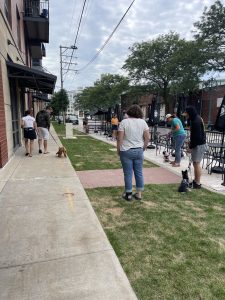
Canine Einstein is the training arm of Milwaukee Paws Pet Care, and the connection between the two is intentional. Our Urban Adventure walks and regular recurring walks are not just exercise. They are structured enrichment experiences led by walkers who understand the value of sniffing, the importance of a manageable pace, and the difference between a walk that activates a dog and a walk that actually helps them decompress.
For reactive and shy dogs especially, who may find group settings or high-traffic routes genuinely stressful, Milwaukee Paws walkers are equipped to adapt. A good walk is not just physical. It is a decompression opportunity, a chance to practice loose-leash walking in real environments, and a consistent source of positive experience in the world.
Training gains generalize when they are supported by consistent, thoughtful daily care. Our walks are designed to do that.
What to Expect: Realistic Progress with Reactive and Shy Dogs
One thing we want to be honest about: teaching a dog to relax, particularly when that dog has a long history of stress or reactivity, is not a quick fix. It is not a problem to be solved in a session or two. It is a process that requires consistency, patience, and a genuine shift in how you relate to and manage your dog's daily experience.
The dogs who make the most progress are the dogs whose owners commit to the lifestyle changes alongside the training. That means reducing unnecessary exposure to triggers while building capacity. It means noticing and reinforcing calm before it disappears. It means letting your dog sniff, even when you are in a hurry. It means prioritizing decompression as a genuine part of the plan, not an afterthought.
The payoff is real. Dogs who learn to relax are easier to live with, more responsive to training, and more capable of genuine joy in their daily lives. The reactive dog who used to lunge at every passing bicycle can become the dog who glances at the bicycle and looks back at you. The shy dog who hid behind the couch at every new visitor can become the dog who settles on their mat and watches from a safe distance. These are not small changes. They are the difference between a dog who is surviving their life and a dog who is thriving in it.
Ready to Start?
If any of this resonates, whether your dog is reactive, shy, or simply a dog who never seems to fully switch off, our June programming at Canine Einstein is designed with exactly these challenges in mind.
Our Decompression in Nature class, Canine Fitness, and Elite Enrichment Series are all enrolling now. Private gym rentals can be booked directly. And if you are interested in pairing structured training support with consistent, enrichment-focused walks, our team at Milwaukee Paws Pet Care is here for that too.
Every dog deserves to feel safe enough to rest. We would love to help yours get there.